The most important Reformer Pilates cues emphasize core engagement pilates reformer, breath coordination, and spinal alignment. “Engage core” activates deep stabilizers for a balanced foundation. Correct breathing uses diaphragmatic inhales through the nose and controlled exhales through the mouth to enhance movement fluidity and tension release. Maintaining a neutral spine protects the back while promoting posture. Controlled, deliberate movements guarantee precision and safety. Adjusting cues based on skill level and body variations optimizes practice quality. Understanding these fundamentals reveals greater Pilates mastery.

What “Engage Your Core” Really Means in Reformer Pilates
Understanding what “engage your core” truly entails is essential for effective practice in Reformer Pilates. Rather than simply tightening the abdominal muscles, it involves activating a deep, supportive network that stabilizes the spine and pelvis.
This engagement is subtle, not forceful, creating a balanced foundation that allows freedom of movement. It requires mindful connection to the transverse abdominis, pelvic floor, and diaphragm, forming a natural corset.
Proper core engagement supports alignment and control in Reformer Pilates, enabling smoother shifts and preventing strain. For those attending reformer pilates KL classes, learning this subtle activation can help improve body awareness, posture, and overall movement quality.
Recognizing this distinction empowers practitioners to move with intention, enhancing both performance and the liberating benefits of Reformer Pilates.
How to Breathe Correctly in Reformer Pilates
Proper breathing in Reformer Pilates involves mastering diaphragmatic breathing and synchronizing breath with movement.
Attention to common breathing mistakes is essential for maximizing effectiveness and safety.
Understanding these elements supports improved control and fluidity during exercises.
Diaphragmatic Breathing Basics
Mastering diaphragmatic breathing is essential for effective Reformer Pilates practice, as it enhances core engagement and promotes relaxation.
This breathing technique involves inhaling deeply through the nose, allowing the diaphragm to expand downward, which fills the lungs fully and creates a gentle outward movement of the lower ribs and abdomen.
Exhaling through the mouth should be controlled and complete, engaging the transverse abdominis to support spinal stability.
Unlike shallow chest breathing, diaphragmatic breathing optimizes oxygen flow and encourages a calm, focused state.
Practitioners gain freedom of movement by maintaining this steady breath pattern, which anchors the body and minimizes tension.
Understanding these basics provides a foundation for improved control and fluidity throughout the Reformer Pilates experience without restricting natural breath rhythms.
Coordinating Breath With Movement
Coordinating breath with movement in Reformer Pilates synchronizes the body’s actions with inhalations and exhalations to maximize efficiency and control. This connection allows practitioners to move fluidly, enhancing stability and power while reducing unnecessary tension.
Inhaling typically prepares the body for movement by expanding the rib cage and engaging the core. Exhaling supports exertion phases, facilitating deeper muscle activation and controlled motion.
Breath timing aligns with the rhythm of the Reformer’s carriage, creating harmony between breath and physical effort. Proper coordination frees the body, enabling more precise, graceful execution of exercises.
Ultimately, this breath-movement integration cultivates a sense of ease and presence, empowering individuals to move with greater awareness and freedom within their practice.
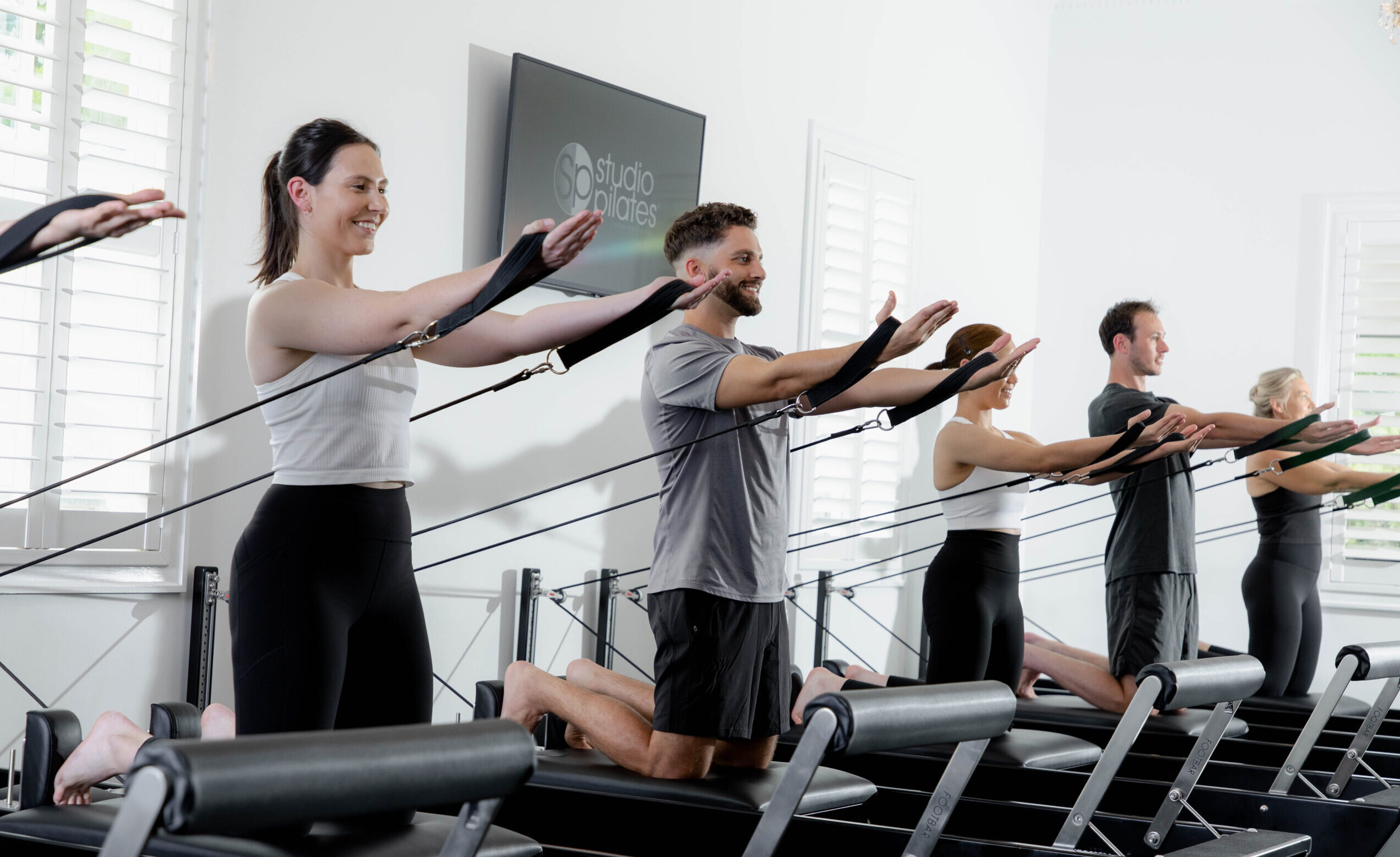
Common Breathing Mistakes
Although breathing is a fundamental aspect of Reformer Pilates, common mistakes often undermine its effectiveness. Many practitioners hold their breath during challenging movements, limiting oxygen flow and increasing tension. Others breathe shallowly, restricting the natural expansion of the ribcage and reducing core engagement. Incorrect timing, such as exhaling during relaxation phases instead of exertion, disrupts fluidity and control. These errors confine the body’s potential rather than liberate it.
Proper breathing in Reformer Pilates involves deep, rhythmic inhales through the nose and controlled exhales through the mouth, coordinated precisely with movement. This approach enhances stability, promotes relaxation, and maximizes efficiency. Embracing correct breath patterns frees movement, allowing practitioners to experience the full benefits of Reformer Pilates with greater ease and importance.
How to Align Your Spine Safely on the Reformer
Proper spinal alignment on the Reformer is essential for maximizing the effectiveness of each movement while minimizing the risk of injury. Maintaining a neutral spine allows for balanced muscle engagement and supports fluidity in motion.
Practitioners should focus on lengthening the spine, avoiding excessive arching or rounding, and ensuring the head, shoulders, and hips remain stacked. Engaging the core stabilizes the lumbar region, providing a strong foundation.
Awareness of pelvic position—tilting neither forward nor backward excessively—helps preserve natural spinal curves. Instructors often cue “imagine a string pulling the crown of the head upward” to encourage elongation without tension.
This alignment fosters freedom of movement, allowing the body to flow naturally through exercises with control and ease, enhancing both safety and performance on the Reformer.
What Controlled Movements Look Like on the Reformer
Controlled movements on the Reformer emphasize precision in every motion, ensuring each action is deliberate and exact.
Maintaining steady control prevents unnecessary momentum, promoting muscle engagement and safety.
This focused approach enhances the effectiveness of the Pilates practice.
Precision In Every Motion
In mastering the Reformer, every movement demands deliberate attention and exactness. Precision in every motion ensures that each exercise is executed with intentionality, maximizing the body’s alignment and engagement. This focus on accuracy allows practitioners to move fluidly while maintaining control, fostering a sense of freedom within disciplined motion.
Maintaining Steady Control
Steady control on the Reformer manifests through smooth, deliberate movements that balance strength and stability.
Controlled movements are neither rushed nor rigid; they flow with intention, allowing the practitioner to harness the machine’s resistance while maintaining alignment and core engagement. This control creates a sense of freedom, as each motion becomes purposeful rather than forced.
Maintaining steady control involves consistent breath coordination, mindful muscle activation, and an awareness of tension versus relaxation. It enables seamless transitions between exercises, enhancing both efficiency and grace.
Ultimately, steady control on the Reformer cultivates a fluidity that empowers the body to move with confidence, precision, and ease, embodying the freedom that Pilates seeks to release.
How to Adjust Reformer Pilates Cues for Your Skill Level and Body
When tailoring Reformer Pilates cues, recognizing individual skill levels and body mechanics is essential for effective instruction. Cues must be adapted to accommodate varying strength, flexibility, and coordination, ensuring accessibility without compromising challenge.
For beginners, simplifying language and emphasizing foundational alignment fosters confidence and safety. Intermediate practitioners benefit from cues that encourage refined control and deeper engagement of muscles. Advanced individuals require precise, nuanced instructions to enhance fluidity and efficiency.
Additionally, body variations—such as limb length or mobility restrictions—necessitate personalized modifications to optimize movement quality. By calibrating cues thoughtfully, instructors empower practitioners to explore freedom within their practice, promoting progress while honoring individual needs.
This approach cultivates a supportive environment where each body can move with ease and intention.
Decoding Essential Reformer Pilates Instructions for Beginners
Adapting instructions to suit individual abilities sets the stage for introducing core Reformer Pilates directions tailored specifically for beginners. Foundational cues such as “engage your core,” “maintain neutral spine,” and “move with control” guide novices to build awareness without feeling overwhelmed.
Emphasizing breath coordination encourages fluidity and helps release tension, fostering a sense of ease. Clear, simple language demystifies complex movements, promoting confidence and independence.
Beginners benefit from cues that highlight alignment and pacing, enabling them to explore the equipment safely while cultivating strength and flexibility. This approach respects personal limits and invites gradual progression, empowering practitioners to experience freedom through mindful movement.
Decoding these essential instructions reveals Pilates as an accessible path to balance and self-discovery rather than rigid discipline.
Conclusion
Understanding the key cues in reformer Pilates enhances practice effectiveness and safety. Clarifying instructions like engaging the core, proper breathing, spinal alignment, and controlled movements empowers practitioners to perform exercises with precision. Adapting cues to individual skill levels guarantees accessibility and progress. Ultimately, decoding these essential instructions fosters a mindful, informed approach, allowing both beginners and experienced individuals to maximize benefits and reduce injury risk during reformer Pilates sessions.